

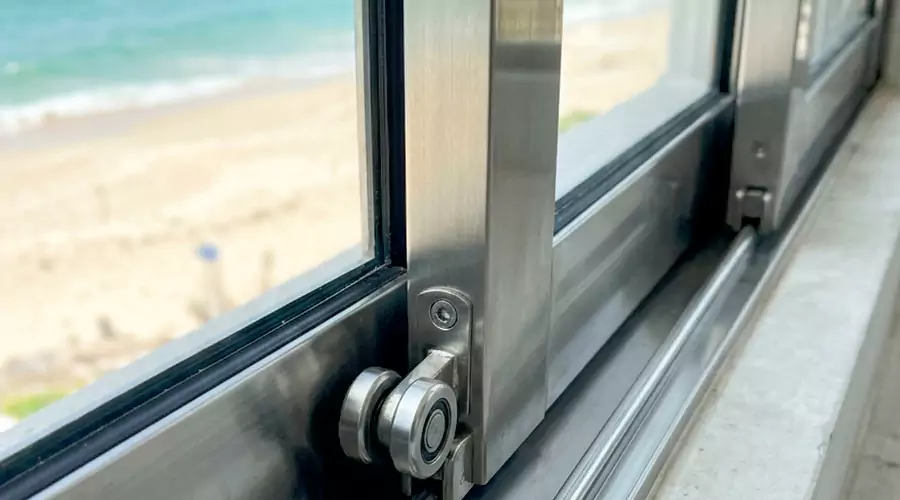

Sliding glass doors are widely used in coastal homes because they provide open views, natural light, and easy access to outdoor areas. However, homes near the ocean face a unique challenge that many homeowners underestimate. Salt air can slowly damage sliding door rollers and tracks, often leading homeowners to require sliding door rollers repair due to sticking, noise, corrosion, and eventual system failure.
Unlike normal wear and tear, salt air damage happens gradually and continuously. Even when a door is not in use, the salty moisture in the air can still affect metal components. Understanding how this process works can help you prevent costly repairs and extend the life of your sliding door system.
In this guide, we will explain how salt air affects sliding door rollers and tracks, the warning signs of damage, and how to protect your door from corrosion.
What Is Salt Air and Why Is It Harmful?
Salt air is air that contains tiny salt particles carried from seawater. In coastal regions, these particles mix with moisture and settle on surfaces, including doors, windows, and metal fixtures.
When salt combines with humidity, it creates a corrosive environment that speeds up rust formation on metal components.
Sliding door systems are especially vulnerable because they contain:
- Steel or metal rollers
- Aluminum or steel tracks
- Bearings and small moving parts
- Fasteners and screws
These components are constantly exposed to outdoor air, making them easy targets for corrosion.
How Salt Air Damages Sliding Door Rollers?
Rollers are the most sensitive moving part in a sliding door system. They carry the entire weight of the door while allowing smooth movement along the track.
1. Corrosion of Bearings
Salt particles can enter the roller housing and reach internal bearings.
This leads to:
- Rust formation inside the bearing system
- Increased friction during movement
- Grinding or squeaking noises
- Loss of smooth rotation
Once bearings corrode, the roller performance drops significantly.
2. Wheel Surface Degradation
The outer wheel of the roller can also be affected.
Damage includes:
- Pitting on metal surfaces
- Rough wheel texture
- Uneven rolling motion
This causes the door to move unevenly and puts extra pressure on the track.
3. Roller Seizure
In advanced cases, corrosion can cause rollers to completely seize.
This results in:
- Door becoming extremely difficult to move
- One side of the door dropping or dragging
- Complete failure of smooth operation
At this stage, replacement is usually required.
How Salt Air Damages Sliding Door Tracks?
The track is the guiding surface that supports roller movement. When it becomes corroded or damaged, the entire door system is affected.
1. Surface Rust Formation
Even aluminum tracks with steel inserts can develop corrosion over time.
Common issues include:
- Rust spots along the track
- Discoloration of metal surface
- Rough patches that interfere with movement
These imperfections cause rollers to grind instead of glide.
2. Pitting and Surface Erosion
Salt exposure can slowly eat away at the metal surface.
This leads to:
- Small pits and grooves in the track
- Uneven sliding paths
- Increased friction during operation
Once pitting begins, it usually worsens over time.
3. Track Weakening and Deformation
In severe cases, long-term corrosion can weaken the structural integrity of the track.
This may result in:
- Bent or warped sections
- Cracked edges
- Loss of proper alignment
A damaged track can no longer support smooth door movement.
Signs Your Sliding Door Is Affected by Salt Air Damage
Salt air damage often develops slowly, so early signs are easy to overlook.
- Grinding or scraping noises during movement
- Door feels heavier than usual
- Rust visible on rollers or track
- Jerky or uneven sliding motion
- Door coming off track more frequently
- Difficulty locking due to misalignment
If you live near a coastal area and notice these signs, salt corrosion is a likely cause.
Why Coastal Homes Experience Faster Wear?
Homes near oceans or large bodies of water experience:
- Higher humidity levels
- Constant exposure to salt particles
- Frequent moisture condensation
This combination accelerates corrosion compared to inland environments.
Sliding doors in coastal areas often require more frequent maintenance because:
- Metal components degrade faster
- Lubricants break down more quickly
- Dirt and salt mix to form abrasive buildup
How to Prevent Salt Air Damage
While salt air cannot be avoided in coastal regions, its impact can be reduced with proper maintenance.
1. Regular Cleaning
Frequent cleaning helps remove salt buildup before it causes damage.
- Wiping tracks with a damp cloth
- Vacuuming debris from the track
- Cleaning roller areas when accessible
2. Lubrication with Proper Products
Use silicone-based lubricants designed for sliding doors.
Benefits include:
- Reduced friction
- Protection against moisture
- Slower corrosion buildup
Avoid oil-based lubricants because they attract dirt and accelerate buildup.
3. Routine Inspection
Check your sliding door regularly for:
- Early rust formation
- Uneven movement
- Loose or worn hardware
Early detection can prevent major repairs.
4. Protective Coatings
Some metal parts can be treated with anti-corrosion coatings.
This helps:
- Reduce rust formation
- Extend lifespan of rollers and tracks
- Improve resistance to moisture
5. Timely Roller and Track Replacement
If damage is already present, replacing affected parts early can prevent further deterioration.
Ignoring worn components often leads to:
- Track damage
- Frame misalignment
- Complete door failure
When to Call a Professional?
Professional repair is recommended if:
- Rust is visible on rollers or track
- Door movement is consistently rough
- Cleaning does not improve performance
- Door frequently comes off track
- Locking alignment is affected
A technician can assess whether cleaning, repair, or full replacement is needed.
Final Thoughts
Salt air is one of the most common causes of sliding door roller and track damage in coastal areas. Over time, salt particles combine with moisture and gradually corrode metal components, leading to rough movement, noise, and system failure.
Regular cleaning, proper lubrication, and early maintenance can significantly reduce the impact of salt air. However, once corrosion becomes advanced, professional repair or replacement is often necessary.
By understanding how salt air affects your sliding door system, you can take proactive steps to protect it and ensure smooth, reliable performance for years to come.
 Reviews
 (537)
(537)